
Fixed vs Mobile Workstation in Life Sciences: What Works in the Cleanroom?

Operator efficiency is one of the most important drivers of output in life sciences manufacturing. When operators can capture manufacturing data in real time, analyse it immediately, and act without delay, the results are measurable: lower waste, reduced deviation risk, higher throughput, and stronger profitability.
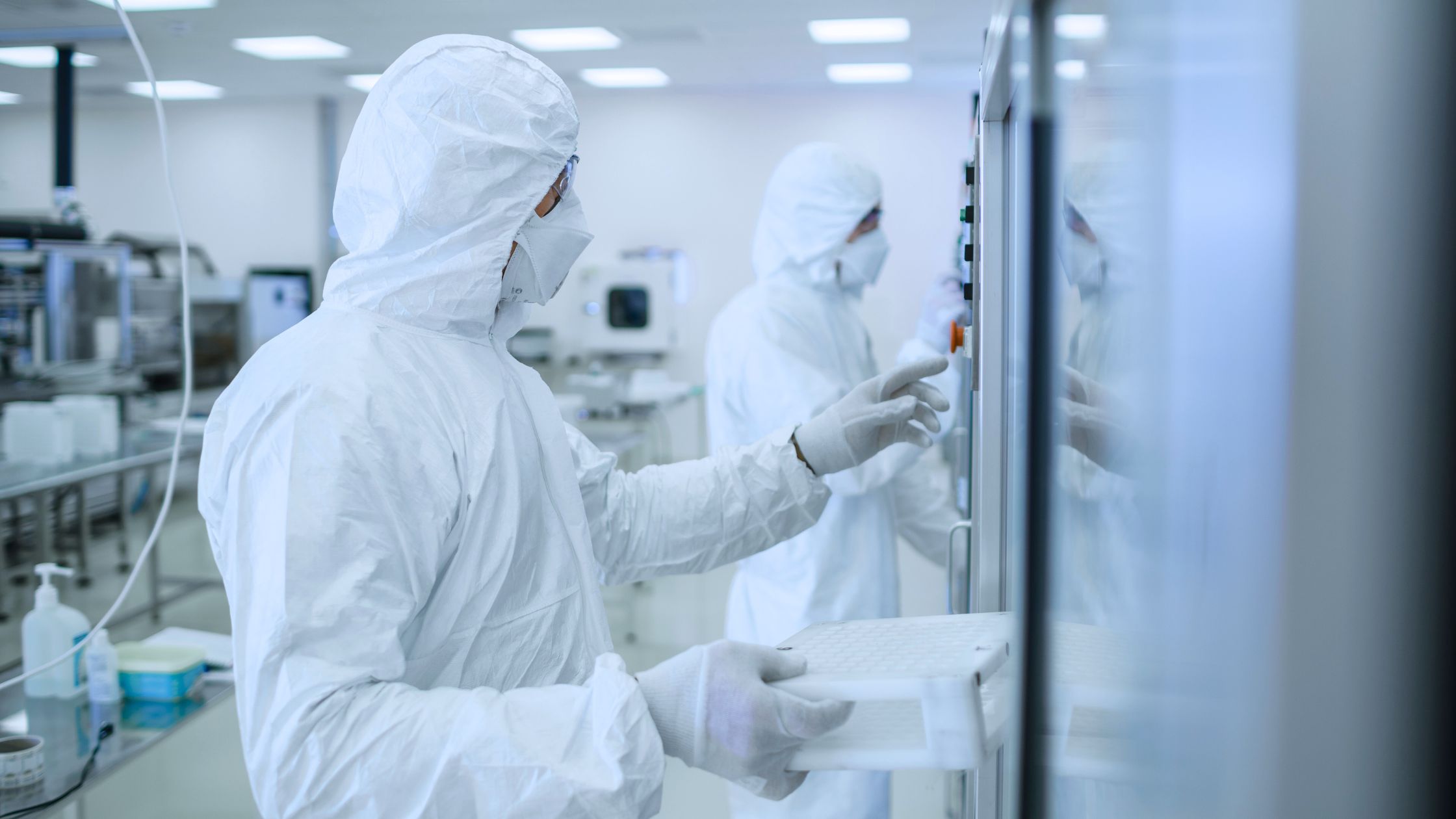
The decision to deploy fixed or mobile workstations plays a direct role in that efficiency, so it shouldn’t be treated as an afterthought. Cleanrooms vary widely, with different grades, layouts, process flows, and QC requirements. This means that what works in a small Grade D filling room may not work in a large Grade C upstream suite.
In this blog, we’ll explore the practical considerations behind fixed and mobile workstation deployment in life sciences environments, and where each approach makes the most operational sense.
What Do We Mean by a “Workstation” in Life Sciences?
Before we compare fixed and mobile setups, let's be clear about what we're actually discussing. A workstation life science environment isn't just a desk with a computer on it. It's the point where operators interact with live production systems inside a GMP facility. It’s a point of compliance, data capture, analysis, documentation, and real-time decision-making.
A workstation life sciences environment typically provides access to:
- MES (Manufacturing Execution Systems)
- DCS or SCADA platforms
- Electronic Batch Records (EBR)
- LIMS systems
- SOP documentation
- QA verification processes
These are the systems that control production, quality, and traceability. Where that access is located matters and influences how quickly teams can respond, how efficiently operators work, and how effectively deviations are managed.
The Case for Fixed Workstations in Life Sciences Manufacturing
Fixed workstations have long been standard across life sciences facilities, and for good reason.
1. Stable Validation Footprint
A hard-mounted terminal in a defined position is straightforward to qualify and control. Once validated, it remains in place, keeping IQ/OQ documentation stable and predictable.
2. Hardwired Reliability
Fixed systems are typically hardwired via Ethernet and connected to continuous power. That removes battery-related concerns and simplifies infrastructure planning.
3. Environmental Control
In higher-grade cleanrooms, fixed placement supports airflow planning and environmental documentation.
4. Space Efficiency
In tight cleanroom spaces where multiple operators are working, a wall-mounted solution can preserve valuable floor area.
ID-View: Fixed HMI Designed for Cleanroom Performance
When mobility isn’t the right choice, a purpose-built fixed HMI provides the right balance of access and hygiene.
ID-View is Kinetic-ID’s fixed-height HMI designed specifically for cleanroom environments.
Unlike traditional fixed HMIs that require shutdown periods for maintenance, ID-View pivots outward, allowing operators or IT teams to access the internal PC directly within the cleanroom. This enables:
- Easier maintenance without extended shutdowns
- Use of existing SFF PCs or Thin Clients
- Monitor replacement without dismantling wall infrastructure
Reduced dependency on holiday or shutdown windows
Key specifications include:
- 24” monitor format
- Wall or floor-mounted configurations
- 304L or 316L stainless steel construction
- Software-agnostic integration (MES, DCS, EBR and beyond)
Fixed doesn’t mean outdated, and fixed stations, when engineered correctly, deliver clean, compliant, and maintainable access for stable workflows.
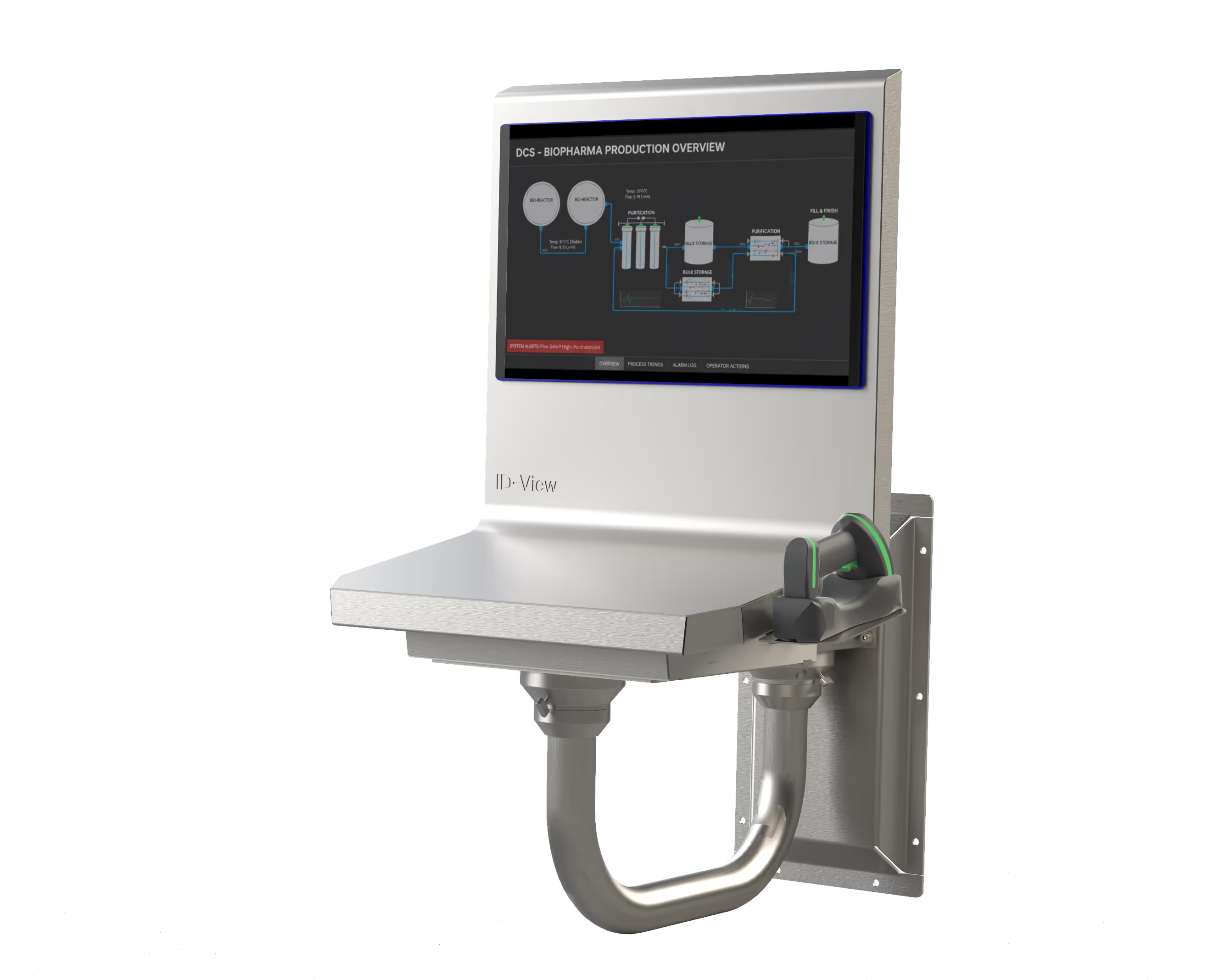
Fixed-height HMI for cleanroom-ready access
When going mobile isn't the right choice. A wall- or floor-mounted fixed HMI for small cleanrooms or space-constrained environments where a dedicated, permanent access point makes more operational sense than a mobile unit.
Why choose this
- Available in 24" monitor size; mounts to wall or floor to suit your space and workflow
- 304L or 316L stainless steel construction for high-grade cleanroom compliance
- Works with your existing SFF PC or Thin Client so no need to replace current compute infrastructure
- Customisation options available to meet unique integration and spatial requirements
Where Fixed Workstations Fit Best and Where They Don’t
Fixed workstations perform extremely well in stable, location-based workflows. If operators consistently return to the same asset or control point, fixed access offers structure and predictability.
However, challenges appear when workflows are dynamic.
In larger spaces or process-heavy suites where operators move between assets, the distance between equipment and data can introduce small delays. Over a shift, those delays accumulate.
When evaluating fixed vs mobile in Life Sciences, consider:
- Cleanroom size
- Distance between process assets
- Grade classification
- QC approval requirements
- Whether workflows are stationary or dynamic
The goal isn’t to label one as better but to determine what maximises operator efficiency and floor visibility in your specific environment.
The Case for Mobile Workstations in Life Sciences
A mobile workstation in life sciences manufacturing introduces flexibility where workflows demand movement. Instead of returning to a fixed wall unit, operators can position the workstation at the exact point of work.
This becomes particularly valuable with electronic batch records and MES-driven processes that require sign-off at the precise location of activity.
Operational Benefits of Mobile Workstations
With a properly designed mobile HMI:
- Parameters can be verified in real time at the asset
- Electronic batch records can be signed at the point of execution
- Deviations can be addressed immediately
- QA, Operations, and Maintenance can collaborate around the same workstation
In large facilities, eliminating unnecessary movement can save hours per shift. Mobile workstations also allow integration of peripherals such as:
- Label printers
- Barcode scanners
- Additional input devices
In this sense, mobile workstations often function as a consolidated operator station, combining multiple tools into one platform.
Mobile Workstations: What About Compliance?
This is where many life science teams hesitate, and the concern is valid. Does mobility complicate validation? Will auditors question movement? Is it even GMP compliant?
Mobility does not compromise compliance when designed correctly. A life sciences mobile workstation must meet the same regulatory expectations as any other GMP asset.
That includes:
- IEC/EN 60601 certified power systems
- Secure authentication and audit-ready traceability
- Non-porous, cleanroom-compatible materials
- Integration with validated IT infrastructure
Solutions such as the ID-Flow mobile workstation series are built around these principles, supporting continuous GMP operations with swappable certified battery systems and cleanroom-ready construction.
When implemented correctly, mobile solutions enhance traceability in dynamic environments by keeping data aligned with the work.
Operational Trade-Offs to Consider
Many procurement decisions start with capital cost, and that's the wrong starting point. The real cost of a workstation decision shows up in operational risk. Here's what matters when you're evaluating fixed versus mobile:
1. Downtime Risk
A two-minute walk can easily become five minutes once you factor in login, navigation, and returning to the line. Multiply that across shifts and teams. Over a year, it's significant.
2. Deviation Prevention
Catching the wrong recipe mid-cycle is cheaper than scrapping a batch. If your workstation strategy doesn't let operators verify in real time, you're accepting higher deviation risk.
3. Total Cost of Ownership
Fixed infrastructure may require cabling changes, wall modifications, or expansion work during facility updates. Mobile systems scale and adapt without construction.
4. Validation Complexity
Adding a new fixed terminal usually means validating the location. Mobile systems can be validated as controlled assets rather than structural modifications.
5. Workflow Agility
Manufacturing lines evolve, processes change, and as your facilities expands, a fixed workstation layout locks you into today's footprint. Mobility easily adapts to tomorrow's reality without ripping out the existing infrastructure.
The Hybrid Model Most Life Sciences Facilities Choose
In practice, most modern sites adopt a hybrid infrastructure, and that's usually the right answer. You don't need to choose one or the other across the entire facility, and instead, you make your choice based on the task, the area, and the risk profile.
A typical deployment may include:
- Fixed ID-View HMIs in space-restricted or stable workflow zones
- Mobile ID-Flow workstations in dynamic production areas
- Shared mobile units for QA or deviation investigation
- Fixed solutions for continuous monitoring stations
This layered infrastructure distributes visibility appropriately rather than centralising it, resulting in a greater operational resilience.
Fixed vs Mobile Workstation in Life Sciences: Feature Comparison
To make the trade-offs clearer, here’s a practical comparison of fixed and mobile workstation setups in a regulated environment:
Fixed vs Mobile Workstation: The Bigger Picture
A workstation strategy in life sciences manufacturing influences how quickly operators can:
- Capture data
- Analyse information
- Act on findings
- Maintain compliance
Improving operator efficiency directly impacts waste reduction, throughput, and profitability.
Fixed and mobile workstations are tools within that strategy and the key is selecting the right tool for the right environment.
SEE HOW TEAMS STAY IN CONTROL
Learn how Life Sciences operators use mobile and fixed HMIs to stay compliant, reduce re-entry steps, and improve workflow accuracy.
Download the brochure
Talk to Us About Building Visibility at the Point of Work
Kinetic-ID designs both fixed and mobile cleanroom-ready solutions engineered for Life Sciences manufacturing.
If you’re reviewing how operators interact with MES, EBR, or DCS systems in your facility, our Life Sciences team can help assess whether fixed, mobile, or hybrid deployment will maximise efficiency in your environment.
Frequently Asked Questions
What is a workstation in Life Sciences manufacturing?
A workstation life sciences setup provides operators controlled access to MES, EBR, DCS, LIMS, and other production systems within a GMP environment.
Are mobile workstations compliant with GMP?
Yes, when designed with certified power systems, cleanroom-compatible materials, and validated IT integration.
When should a fixed HMI be used instead of mobile?
Fixed HMIs are ideal in tight cleanrooms, stable workflow areas, and environments where floor space is limited.
Can fixed HMIs be maintained without shutdown?
With solutions like ID-View, maintenance can be performed inside the cleanroom without extended production shutdown.
Can mobile workstations support printers and scanners?
Yes. Mobile workstations can integrate peripherals such as barcode scanners and label printers.
