
Driving Continuous Optimization in Life Sciences Manufacturing

Margins are tightening. The supply chains are unpredictable. And demand is shifting faster than production lines can adapt.
In life sciences and regulated manufacturing, the pressure runs even deeper, with no shortcuts or workarounds. Validation and documentation matter, and every deviation has a cost, whether that's time, product, or an audit finding.
For years, the answer has been digital transformation. But here's what many site leaders are running into: digitalization alone hasn't fixed the core problem.
Putting in technology is not the same as building continuous optimization, and in regulated environments, that distinction matters a lot.
.jpg)
What's happening on the floor right now
Manufacturing volatility isn't just a temporary phase but the new baseline. Policy shifts, trade uncertainty, and faster technology cycles are all hitting at once.
According to Tulip's 2026 Manufacturing Trends research:
- 77% of manufacturing leaders name trade uncertainty as a top business concern
- 72% are accelerating digital transformation efforts
- AI adoption is growing fast across operations
In life sciences facilities, these pressures land on top of GMP frameworks, where you can't just pivot a process, deploy a new tool, or test a change without validation, documentation, and change control. At the same time, the workforce picture is shifting:
- An estimated 2.1 million worker shortage is predicted in the US alone by 2030
- Experienced operators are retiring
- Newer employees have shorter tenure and higher expectations around technology
In regulated environments, that combination creates real risk. Systems are more complex, people are less experienced, and the bar for speed and accuracy keeps rising.
Why standard digitalization doesn't cut it in life sciences
Most digital projects follow the same pattern: define a project, pick a tool, implement over months, and declare it done. Structured and controlled. On paper, it looks like progress.
The problem? By the time the project wraps, the facility has already moved on:
- Production volumes may have shifted
- Product mix may have changed
- Compliance requirements may have evolved
- Operators may be new to the process
That solution you built eighteen months ago is already out of step with how the facility runs today. The core issue is this: traditional digitalization is project-based. And continuous optimization is not. That gap changes everything about how budgets are structured, how improvement gets measured, and whether change actually sticks.
Where the real bottleneck sits in regulated environments
Life sciences operations are complex by design:
- MES integration
- EBR requirements
- DCS alignment
- LIMS data flows
- Strict validation documentation
These controls exist for good reason as they protect product integrity and patient safety, but they can unintentionally slow down improvement at the exact moment speed matters most. The best improvement ideas almost always start on the shop floor:
- An operator spots an inefficiency
- An engineer notices recurring rework
- A QA lead identifies a process gap
These are the insights that could prevent deviations, reduce waste, or improve throughput. But when acting on any of them means formal projects, cross-functional escalation, and long lead times, agility stalls. In volatile markets, that slow response becomes operational risk.
The shift from digital transformation to continuous transformation
Continuous optimization requires a mindset change. It's not about bigger projects, more dashboards, or another system layer. It's about changing how improvement actually happens day to day:
- Focus on real problems, not abstract milestones, target actual operational bottlenecks, not transformation roadmaps
- Move from "project complete" to ongoing improvement; the work doesn't end at go-live
- Make smaller, faster adjustments. Incremental change beats disruptive overhauls
- Accept that there's no final state, regulated environments keep evolving, so the approach has to as well
In life sciences, this means building controlled adaptability. Validation, documentation, and governance still happen, but they support change instead of blocking it.
Who needs to act, and what they need to do it
Resilient life sciences manufacturers are putting the people closest to the process in a better position to:
- Spot issues in real time
- Access production data at the point of work
- Work across QA, Ops, and Engineering without handoff delays
- Make workflow adjustments within validated frameworks
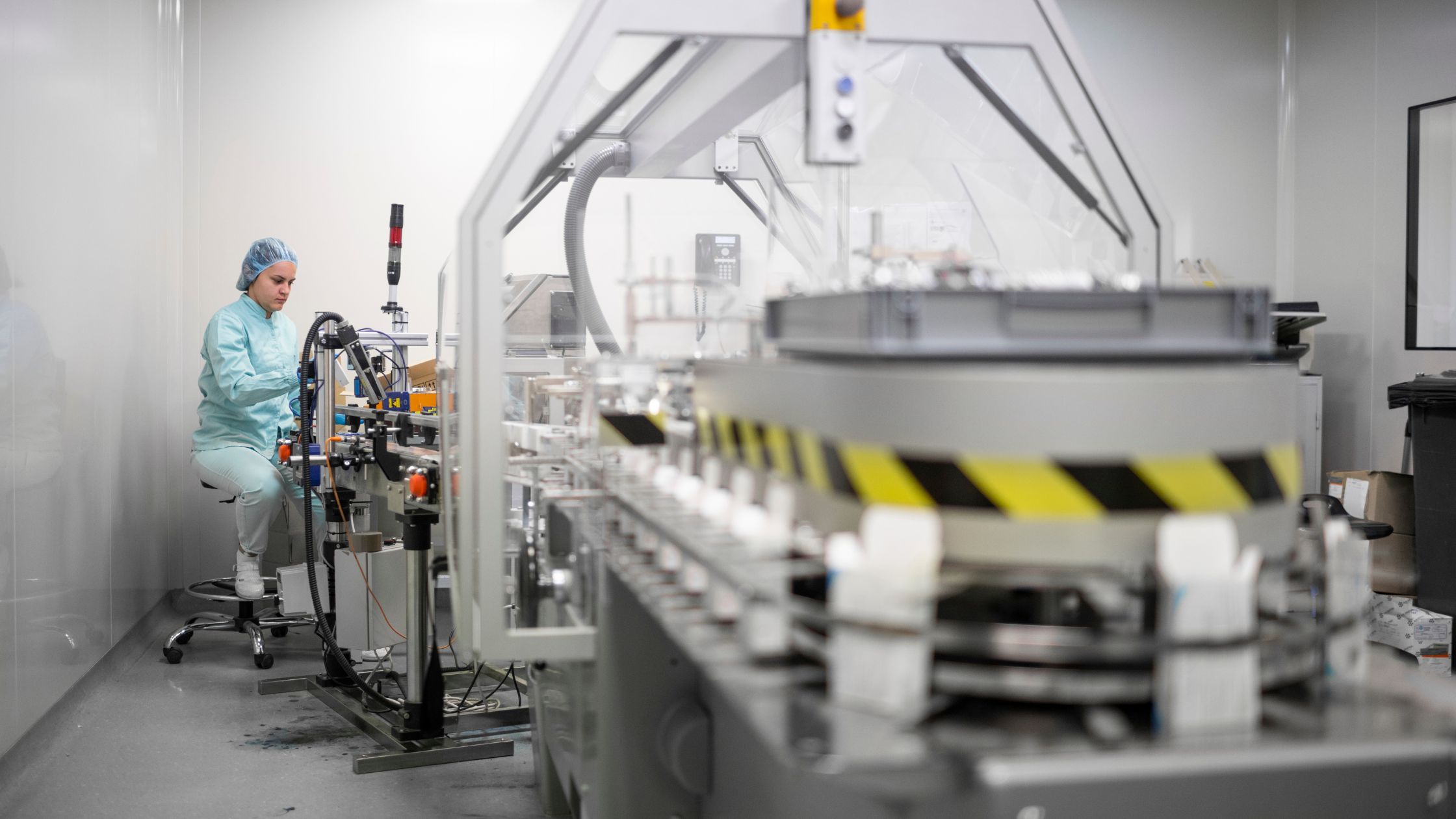
That shift cuts the gap between insight and safe action. When operators can interact with MES or EBR systems at the asset instead of walking back to a control room, visibility improves. When engineers can analyse data where the process is actually running, iteration speeds up. When QA works in-line rather than retrospectively, deviations get caught before they turn into investigations. This is what continuous optimization looks like in practice. And it starts with visibility at the point of work.
The piece most teams overlook: where people access data
Digital tools alone don't drive continuous improvement. Visibility does. And visibility depends on where people can access data, not just whether the data exists somewhere in the system.
If production systems only live in fixed control rooms, operators have to leave the line to see what's happening. If workflow adjustments mean walking across the facility, the change gets delayed. If frontline teams can't get to MES, EBR, or DCS systems at the asset, insight stays trapped in the control room instead of informing real-time decisions.
This is where physical and digital infrastructure meet, and where many sites have a gap they haven't fully addressed. In regulated life sciences environments, enabling continuous optimization often means:
- Cleanroom-ready operator access points
- Fixed or mobile HMIs positioned at the asset
- Secure, validated integration with existing systems
- Infrastructure that adapts as processes change
Operators in facilities using Kinetic-ID mobile workstations report an average of 9% time saving across daily activities. That's not from software, it's from removing the steps between where work happens and where data lives
Kinetic-ID's ID-Flow series is built for exactly this: cleanroom-grade mobile workstations that bring MES, LIMS, and DCS access directly to the operator, across Grade B through to packaging and shipping environments. Whether it's a Grade B critical zone requiring a fully enclosed 316L stainless steel unit like the ID-Flow 9, or a Grade C/D environment where hot-swappable battery capability matters most with the ID-Flow 5, the hardware brings system access directly to the point of work.
Optimization isn't just a software strategy. It's an infrastructure strategy. Ignoring one undermines the other.
Why modular beats monolithic in regulated manufacturing
Point solutions solve isolated problems while composable systems evolve. That's the practical difference between buying a tool that fits today's process and building capability that adapts to tomorrow's requirements. Continuous optimization in manufacturing benefits from modular approaches that:
- Integrate with validated MES and EBR systems
- Scale across production suites
- Support incremental deployment
- Allow safe iteration without major shutdowns
Rather than replacing everything at once, leading life sciences facilities layer improvements where they matter most, connecting systems step by step, building resilience without stopping production.
Kinetic-ID's rollout model reflects this. Pilot in a target area, validate for GMP compliance, then scale with full support. It's built for regulated workflows and operational continuity, not a big-bang deployment that creates risk at every stage.
The human side of all this
People are the real engine of process agility. But they need tools that match how they actually work inside cleanrooms and regulated production spaces.
In a workforce with varying experience levels and shorter average tenure:
- Intuitive systems cut training time
- Accessible data builds operator confidence
- Clear visibility at the point of work creates ownership
- Infrastructure that fits the workflow reduces friction
When those things come together, continuous optimization becomes cultural, not just an operational target. Teams stop waiting for the next project to fix something and start acting on what they're seeing every day.
Compliance and continuous improvement aren't in conflict
In life sciences, optimization has to coexist with compliance. That means controlled system access, audit-ready traceability, validated infrastructure, and documented change management. But compliance doesn't require rigidity. Those two things get conflated too often, and it holds teams back.
Facilities that treat governance as an enabler rather than a blocker are the ones adapting fastest. They've shifted from reactive digitalization (responding to problems with projects) to proactive continuous transformation. They've built environments where:
- Operators act in real time
- Engineers iterate safely
- QA collaborates at the point of work
- Infrastructure supports evolution rather than resisting it
Digital isn't enough on its own. Continuous optimization demands visibility, adaptability, and frontline teams who can actually act on what they see, all supported by infrastructure that was designed for regulated environments from the start.
Speed Without Shortcuts
In volatile markets, speed is an advantage. In regulated life sciences manufacturing, speed has to stay controlled. Continuous optimization bridges those two realities by creating systems, digital and physical, that make improvement possible every day without trading off compliance or stability.
The gap most sites are sitting with right now isn't a software gap. It's an infrastructure gap. The data exists, and the systems are in place, but if operators can't reach them at the point of work, the insight never translates into action.
If your team is still walking back to a control room to check MES data, the infrastructure isn't keeping up with your ambitions. That's the gap Kinetic-ID helps fix.
Talk to the Kinetic-ID Life Sciences team
If your team is evaluating workstations for regulated production environments, Kinetic-ID can help assess which infrastructure design best supports cleanroom requirements, validated workflows and long-term operational reliability.
Speak with a solutions consultant
