Med-Safe: Smarter Drug Rounds, Safer Storage

Most hospital drug carts are still stuck in the past with basic lock-and-key setups or shared PIN codes that everyone knows and no one changes. Neither gives a ward the accountability that safe medication storage now demands, and the failure modes are familiar: a door left unlocked, a code that has quietly spread beyond the people it was meant for, a PIN-lock battery that dies mid-round.
Kinetic-ID's Med-Safe is built to close those gaps. It is a smart, secure drug dispensing cart designed for healthcare teams who are done with battery failures, guesswork, and unmanageable access. If you are looking to replace an outdated medication cart or a clunky workstation on wheels, this is the category it belongs to, part of Kinetic-ID's wider workstations and dispensing range.

What Makes It Different?
Unlike a standard computer-on-wheels, every drawer is controlled by intelligent electronic locks that open via software, with no exposed physical lock for day-to-day use. Staff unlock a drawer with a touchscreen, keypad, or RFID card — NFC or NHS SmartCard — each tied to a specific person rather than a generic code.
And everything is logged. Every drawer, every time. The system records access in a tamper-evident audit trail, so if there is ever a question about who accessed what, when, and for how long, the answer is already captured. It also monitors drawer status continuously and raises visual and audible alerts when a drawer stays open beyond a configured threshold, reducing the risk of diversion, loss, or contamination. The wider case for carts that produce data rather than sit silent is made in What Should Your Medication Carts Tell You?.
Designed with NHS Trusts (Not Just For Them)
Kinetic-ID developed Med-Safe in collaboration with several NHS trusts, so it is built around real ward and pharmacy challenges rather than shipped off the shelf, and it aligns with Royal Pharmaceutical Society (RPS) guidance on medication storage. Three legacy problems disappear:
- Shared PINs are gone. Staff use personal access methods, ending the pass-the-code culture.
- Dead batteries are managed, not discovered. Battery status is monitored centrally through Kinetic Pulse, so power is a planned task rather than a mid-round surprise.
- Unlocked drawers are flagged. Controlled access and open-drawer alerts mean nobody has to remember to lock up.
How It Works
Each Med-Safe manages access through its own secure controller, and it is designed to work in both connected and offline modes so a dropped network connection does not lock a ward out. In practice, that means drawer permissions can be set by role, person, or shift; access happens through a touchscreen, barcode, password, or RFID card; and the system links directly with EPMA (Electronic Prescribing and Medicines Administration) where a trust wants it. The result is a record that captures not just who opened a drawer, but why, when, and how long it was open. Trusts running Real-Time Location Solutions (RTLS) can fold the cart's live location into the same activity log.

Choose the right tier: PIN, PRO, or FULL
One of the most useful changes to Med-Safe is that it is no longer a single configuration. It comes in three tiers, so a trust can match access control to its governance model and scale up over time.
The tiers also split neatly along the two teams that care most about a drug cart. For pharmacy and nursing, Med-Safe prevents unauthorised access, enforces role-appropriate restrictions, prompts staff before an unsafe storage state, and captures a complete chronological audit trail. For IT and operations, an admin dashboard shows the real-time status of every device, Kinetic Pulse reports battery status and frequency of use, usage data reveals where capacity is needed or spare, and lost cards can be frozen or accounts suspended centrally.
Where Will You See Med-Safe in Action?
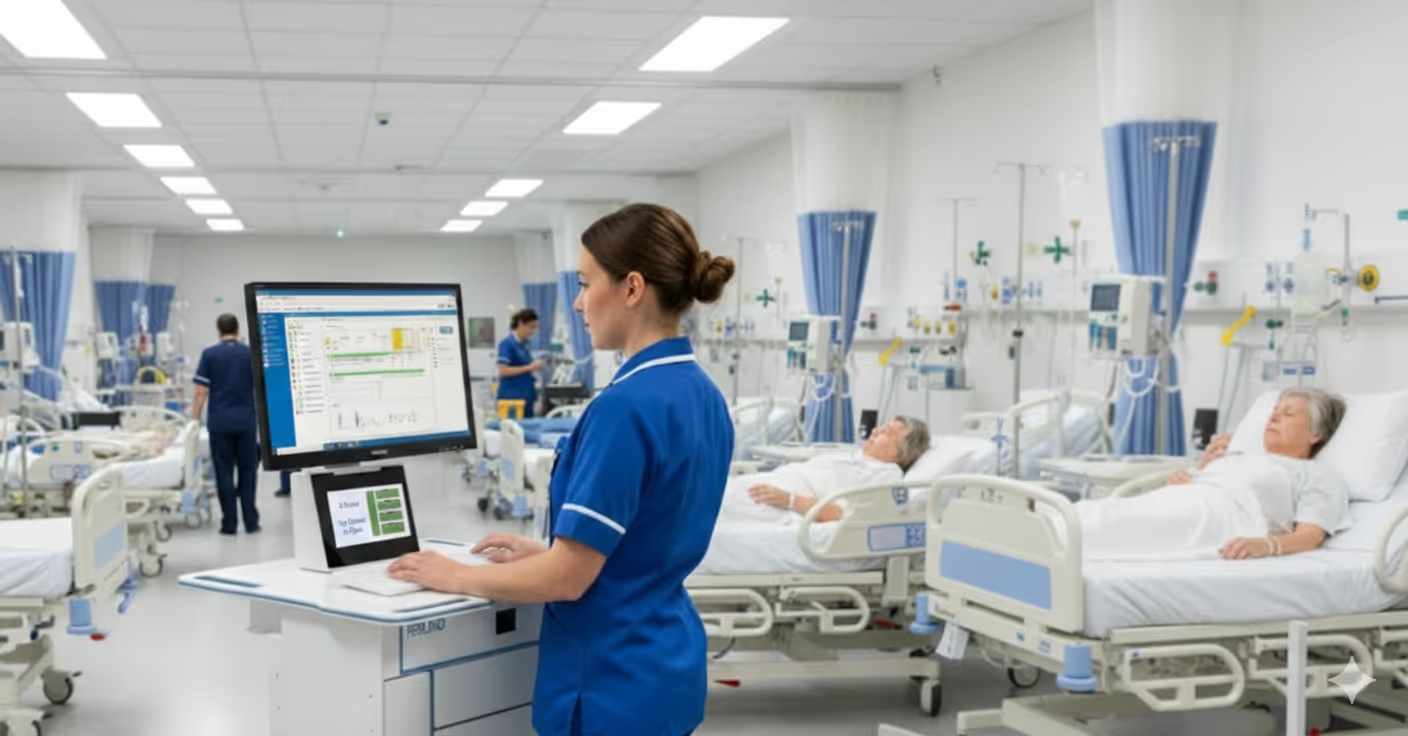
Whether you call it a medication trolley, a dispensing cart, or a mobile medication cart, it is built for the job, and it pairs naturally with the Med-Side bedside cabinet where self-administration extends the same controlled, audited approach to the bedside.
Why Teams Like It
Med-Safe is faster, because there are no codes to remember or keys to lose. It is safer, because each drawer logs exactly who accessed it. It is flexible, with a modular design that scales from three drawers to nine and access by touchscreen or RFID. It is cleaner, with a flat, easy-to-wipe design and nothing hanging off the sides. And it is fail-safe: if the electronics ever fail, a mechanical override key means a ward is never locked out.
Who is Using It?
These are not future customers, they are already on board, including Bradford Teaching Hospitals, Doncaster and Bassetlaw, Morecambe Bay, Princess Alexandra, Barking, Havering and Redbridge, and Swansea Bay University Health Board. Doncaster alone has rolled out more than 60 carts, which is a proven deployment rather than a pilot. The common thread across these settings is the shift the sector is making from analogue storage to accountable, point-of-care dispensing — a shift examined in The Last Mile of Medication.
Replacing lock-and-key or shared-PIN drug carts?
Med-Safe is the software-controlled medication cart built for it: per-user access by touchscreen, password, or NHS SmartCard, a tamper-evident audit trail, open-drawer alerts, EPMA and RTLS integration, and a modular three-to-nine drawer design. Our solutions team can walk you through which tier and configuration suit your wards and pharmacy.
Speak with a solutions consultant